








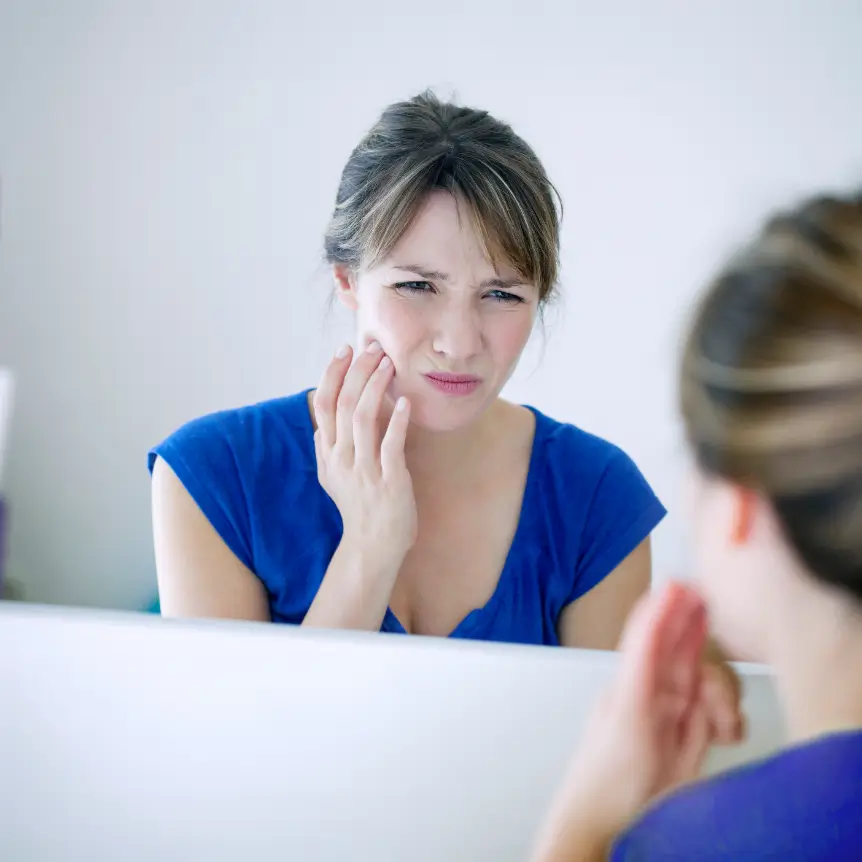
You may notice jaw tightness, tooth sensitivity, or changes in how your teeth feel during daily use. At our dental clinic, we talk through these changes with you and consider whether teeth grinding may be part of what you are experiencing.
Teeth grinding, often called bruxism, occurs when a person clenches or grinds their teeth, sometimes during sleep or at times of tension. It can place repeated pressure on teeth and jaw joints over time.
At our dental clinic, we take a steady approach to these conversations. We explain what may be happening in clear terms so you can understand the considerations involved.
Several factors may contribute to teeth grinding, and it does not always develop for a single reason. Different everyday influences may be linked to repeated pressure on teeth and jaw muscles.
Tension in jaw muscles may lead to repeated clenching or grinding.
Grinding may occur during sleep without a person noticing.
The way teeth meet may place uneven pressure during biting.
Daily routines or stress may sometimes influence clenching habits.
Teeth grinding can lead to gradual changes in teeth, jaw muscles, and bite contact. During dental visits, we observe several areas to understand whether grinding habits may be affecting your oral health.
When teeth grinding is suspected, our dentist focuses on understanding your experience and examining how grinding may be affecting your teeth and jaw. Care decisions are discussed step by step.
We begin by discussing symptoms you may notice, such as jaw tightness, tooth sensitivity, or morning discomfort.
Our dentist observes tooth surfaces, bite contact, and jaw movement to understand how grinding pressure may be affecting oral structures.
We talk through daily habits, sleep patterns, or muscle tension that may contribute to clenching or grinding behaviour.
Based on these observations, our dentist explains options that may be considered, including a custom mouthguard or other suitable approaches.
The annoying thing about the place is trying to stay awake because its so comfortable. thankfully they all have a good sense of humor and are friendly. otherwise they would have to pry my mouth open as i sleep. have not gone to see you guys in a few years but i will be returning shortly.
Note: Any surgical or invasive procedure carries risks. Before proceeding, you should seek a second opinion from an appropriately qualified health practitioner.
Repeated grinding pressure may place additional stress on dental restorations such as fillings, crowns, or veneers. During dental visits, our dentist observes how teeth contact each other to see whether grinding habits could be influencing existing restorations.
Not always. Many people are unaware of grinding because it often occurs during sleep, and it may only be noticed when changes such as tooth wear or jaw tightness are discussed during a dental examination.
People may become aware of night grinding through signs such as jaw stiffness in the morning, tooth sensitivity, or headaches after waking. Noticing these patterns can help indicate whether teeth grinding may be occurring, and discussing them with our dentist can provide further insight.