A dentist in blue scrubs and purple gloves gently adjusts a young girl's bib in a modern dental office. The girl, seated in an orange chair, smiles up at the dentist.

Teeth Whitening in Clayton South

Have you noticed your teeth appearing darker or less bright than they once were? At our clinic in Clayton South, we look at these changes with you and talk through how teeth whitening fits into your overall care.

curved mask big one border
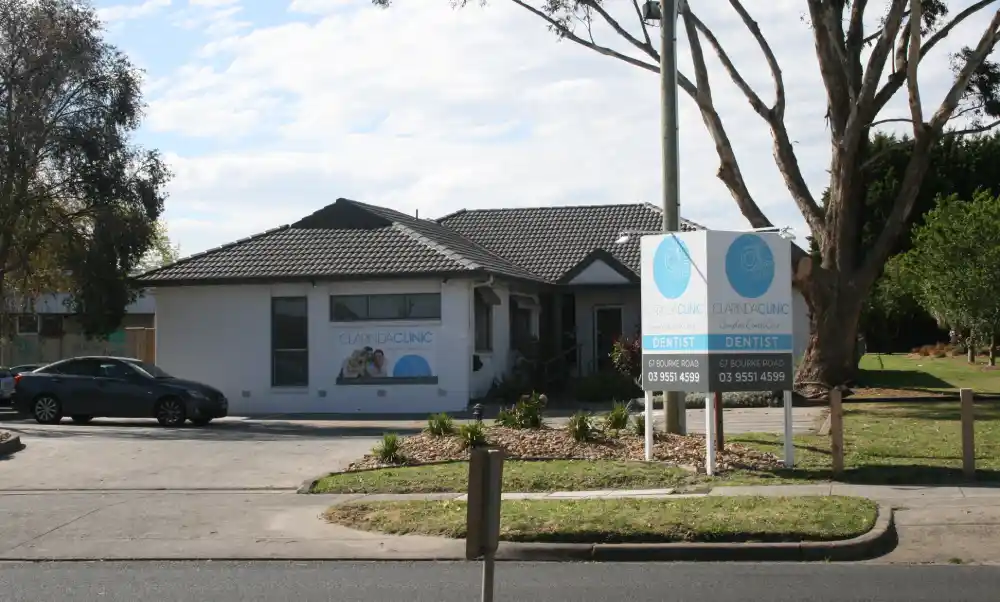
Single-story of Clarinda Clinic Exterior 2017 with grey roof, blue signage, and large windows. Front parking area, surrounded by trees and greenery, creating a welcoming atmosphere.

A Simple Look At Teeth Whitening

Teeth whitening focuses on lightening the colour of your teeth to address staining or changes that develop over time. This may relate to lifestyle factors, natural ageing, or surface buildup. 

At our dental practice, we partner with you throughout the teeth whitening process, so your care feels considered and aligned with your long-term oral health.

Years of Care
0 +
Patients Treated
0 +
Commitment to Quality
0 %

What Teeth Whitening May Offer 

When you start considering teeth whitening, understanding its features can make a difference. These may relate to both appearance and how treatment fits into your routine over time and daily habits.

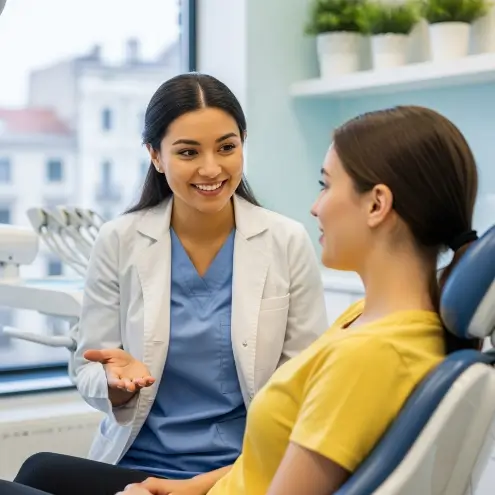
A dentist in a blue shirt and white coat smiles and talks to a patient seated in a dental chair.

Surface Stain Reduction

Whitening may help reduce visible stains caused by food, drinks, or ageing.
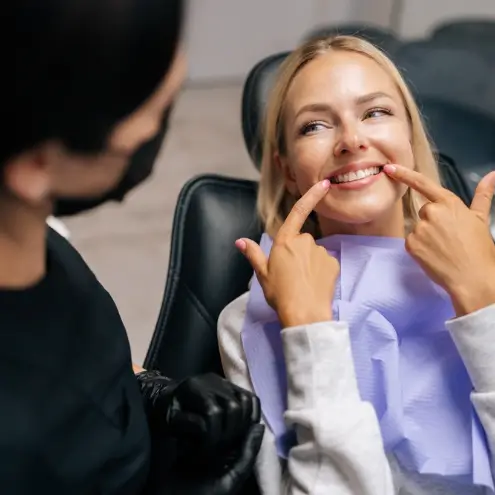
A woman in a dental chair smiles widely, pointing at her teeth with both hands. A dentist in black gloves looks on.

Even Tooth Shade

It may assist in creating a uniform colour across teeth.

A woman with blonde hair smiles while seated in a dentist's chair, wearing a pink top and a blue dental bib. The setting is bright and clinical.

Flexible Whitening Options

Whitening can be adapted to suit different schedules and daily habits.

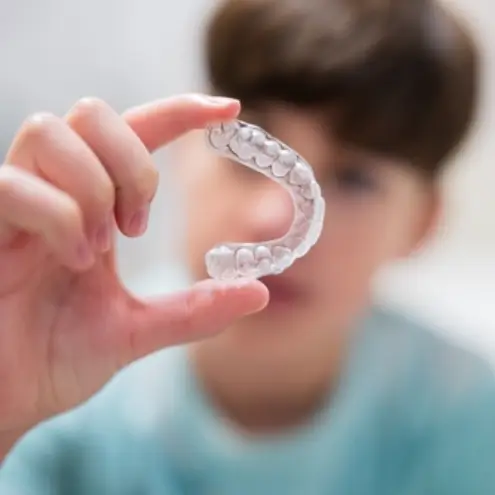
A person holds up a clear dental aligner in focus, with a blurred face in the background.

Subtle Smile Changes

It may contribute to a fresher look without altering tooth structure.

curved mask big blue
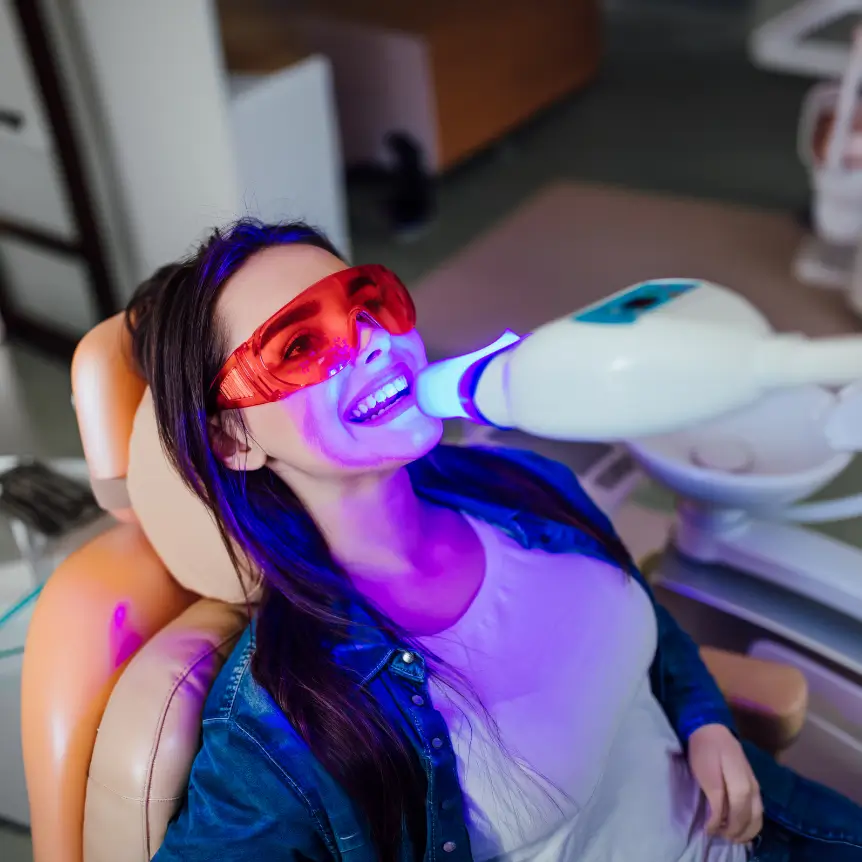
A woman in a dentist chair undergoes teeth whitening, wearing red protective glasses. A blue light shines on her teeth, creating a clinical, focused mood.

Common Causes Of Tooth Discolouration

Tooth colour can change due to a range of external and internal factors over time. Below are common causes of discolouration that may be considered when assessing suitability for whitening care.

Book a visit to discuss teeth whitening with our dentist and how it may relate to your oral health.

How We Carry Out Teeth Whitening At Our Clinic

At our clinic, we follow a clear approach to whitening, explaining each stage so you can understand how treatment is carried out and what to expect during your visit.

STEP - 01

Checking Tooth Shade

We begin by reviewing tooth shade, enamel condition, and factors that may influence how whitening responds.

STEP - 02

Preparing Teeth And Gums

Teeth are cleaned, and gums are protected before whitening begins, helping isolate the treatment area during the in-chair procedure.

STEP - 03

Applying Whitening Gel

Whitening gel is applied to tooth surfaces and left in place for a set time as part of the treatment.

STEP - 04

Reviewing Results Together

After treatment, we review your tooth shade and provide guidance on managing staining factors and maintaining results over time.

Trusted Care, Proven Results

The annoying thing about the place is trying to stay awake because its so comfortable. thankfully they all have a good sense of humor and are friendly. otherwise they would have to pry my mouth open as i sleep. have not gone to see you guys in a few years but i will be returning shortly.

Google Icon
Eric Knight

Me and my wife Anna are very happy with the work and service that they provide and there friendly atmosphere we recommend them

Google Icon
George Arhontogeorgi

I never expected to have a comfortable day in dentist chair! Had I known this .before, I would have been in this place long time ago.

Very professional and friendly staff!!

Google Icon
Antti Honkalinna

Frequently Asked Questions

Yes, we offer take-home teeth whitening as part of our care, based on your preferences and how your teeth present. As part of this approach, custom-made trays are prepared to fit your teeth closely. These trays are designed based on impressions taken during your visit, helping guide how whitening gel is applied at home. We provide systems such as Opalescence and PolaDay, which are selected based on your preferences and how they fit within your care plan. Instructions are shared on how to use them safely and consistently, while maintaining good oral hygiene throughout the process. This option allows whitening to be carried out gradually, with ongoing support from our dental clinic as part of your care.

Existing tooth shade and stain type

The starting shade of your natural teeth plays a key role in how whitening responds. Surface stains from food or drinks may respond differently compared to deeper discolouration. These differences are assessed early, often during an initial consultation, to help shape a personalised approach that reflects your current tooth condition.

Current dental health and oral condition

Your dental health can influence how whitening progresses. Areas affected by sensitivity, enamel changes, or existing restorations may respond differently during treatment. We will review these factors as part of ongoing dental care, helping maintain optimal oral health before whitening is considered.

Oral hygiene and daily habits

Consistent oral hygiene habits can affect how whitening results develop and are maintained over time. Regular brushing, flossing, and routine check-ups help manage surface buildup. These habits support a healthy smile and provide a stable environment for whitening to be carried out effectively.

Treatment approach and planning

The way whitening is planned can also influence how it responds. Professional teeth whitening treatments are guided by a skilled dental team, where each step is considered within a cosmetic dentistry framework.

Suitability and individual assessment

Not all individuals respond in the same way to whitening. Identifying eligible patients involves assessing whether a solid foundation is in place for treatment. This includes reviewing your overall dental care and determining how whitening may significantly improve your smile’s aesthetics based on individual factors.


Teeth whitening works on natural tooth surfaces and may not change the colour of existing restorations such as fillings, crowns, or veneers. This means there can be a difference in shade between treated teeth and restored areas. During your visit, we review these aspects and discuss how they may relate to your overall tooth appearance before starting whitening.

Teeth whitening may still be considered if you have sensitive teeth, depending on your current tooth condition. We assess your level of sensitivity and overall dental health before recommending an approach. This helps determine how whitening can be planned in a way that aligns with your needs, with guidance provided on how to manage sensitivity during your care.

After whitening, attention is placed on how your teeth respond as the colour settles over time. Rather than focusing only on restrictions, guidance is shaped around your routine, helping you understand how daily habits and various factors may influence how your results stabilise. This approach supports your aesthetic goals while keeping your care consistent and considered.

During this period, our experienced team may suggest small adjustments to how you approach food, drinks, and general habits, based on your individual needs. These recommendations are not fixed for everyone and are discussed in a way that reflects how your teeth respond following treatment.

Ongoing dental visits play an important role in reviewing your tooth shade and overall oral condition. These reviews allow changes to be monitored over time, helping your care remain aligned with your progress. Maintaining regular oral hygiene practices continues to support your care, with guidance provided as part of your follow-up visits.

English is spoken at our clinic. Communication is kept clear and straightforward, allowing discussions about your care, questions, and treatment steps to be understood comfortably during your visit.