

Tooth enamel defects are more common than many people realise, affecting both baby teeth and adult teeth. Understanding what causes them and how they may affect oral health over time can help you make informed decisions about dental care.
At Clarinda Clinic, our dentists take the time to examine each patient’s teeth carefully, explain what they observe, and discuss suitable care options at every stage of development. If you would like to learn more about how we approach ongoing care, visit our check-up and clean page.
Quick Overview
- Tooth enamel defects are a group of developmental conditions that affect how enamel forms, resulting in teeth that may be weaker, thinner, or differently coloured than usual
- Both children and adults may be affected; defects can appear in baby teeth, first permanent molars, or front teeth
- Depending on the type and severity, care may focus on protecting affected teeth, reducing sensitivity, and supporting long-term oral health
- The cause, which teeth are involved, and the age of diagnosis all influence the approach to care and how teeth respond over time
- A dental examination helps identify the type of defect and what monitoring or treatment may be appropriate
Keep reading to understand the main types of enamel defects, what causes them, and what options may be relevant depending on your situation.
What Are Tooth Enamel Defects?
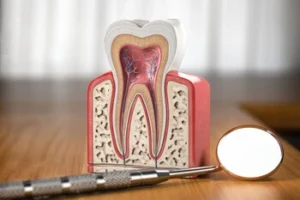 Tooth enamel is the outermost layer of the tooth and is considered the hardest substance produced by the human body. When enamel forms correctly, it provides a strong, protective surface. When development is disrupted, the result can be enamel that is thinner than normal, softer, or structurally incomplete.
These conditions are known collectively as developmental enamel defects, and they can affect both primary teeth (baby teeth) and permanent teeth (adult teeth).
Enamel defects generally fall into two patterns:
- Too little enamel: The tooth surface forms with less enamel than it should. Teeth may appear pitted, grooved, or have visible gaps in the surface.
- Weak enamel: The enamel may be a normal thickness but is softer or more porous than healthy enamel, making it more vulnerable to damage and decay.
Some conditions involve both issues at once. One example is molar incisor hypomineralisation, or MIH, a condition where the back molars and front teeth develop with chalky, discoloured patches and weaker enamel than usual.
What Causes Enamel Defects?
Enamel defects can have inherited or environmental causes, and sometimes both factors play a role.
Inherited enamel defects run in families. One example is amelogenesis imperfecta, a condition passed down through genetics that affects how enamel forms across most or all teeth in both baby and adult teeth.
Developmental enamel defects arise from disruptions during the period when teeth are forming. These can include:
- Early childhood illnesses, including middle ear infections and high fevers
- Poor nutrition or not getting enough vitamins (particularly vitamins A, C, and D) during early development
- Premature birth or low birth weight
- Environmental factors occurring during the first years of life
When a disruption happens at a specific point in development, the teeth forming at that time tend to be the ones affected. This is why back molars and baby teeth are sometimes involved together.
Dental fluorosis is a separate but related condition caused by excessive fluoride exposure during enamel formation and can cause white spots or, in more severe cases, pitting on tooth surfaces.
How Do Enamel Defects Affect Teeth?
The impact of enamel defects varies depending on the type, which teeth are involved, and how much of the tooth surface is affected.
Common effects include: 
- Tooth sensitivity: Teeth with weak or missing enamel are often more sensitive to hot and cold foods and drinks, as well as sweet or acidic foods
- Increased risk of dental decay: Weaker enamel is more porous than healthy enamel, meaning it is more vulnerable to decay
- Enamel breakdown: Without adequate protection, affected teeth can wear more quickly than surrounding teeth
- Appearance changes: Teeth may show white, yellow, or brown patches, or appear structurally different from neighbouring teeth
Children with MIH or weakened teeth may find dental appointments uncomfortable due to sensitivity. Data published in the European Archives of Paediatric Dentistry indicates that MIH affects approximately 14.7% of Australian children and is associated with increased dental hypersensitivity and a higher rate of tooth decay.
What Treatment Options May Be Relevant?
There is no single approach to managing enamel defects. The right care depends on the type of defect, the teeth involved, and your individual oral health situation.
Options a dentist may discuss include:
- Monitoring and preventive care: For mild defects, regular check-ups with close monitoring, fluoride application, and guidance on oral hygiene and diet may be appropriate
- White fillings or composite veneers: For teeth with surface defects or breakdown, tooth-coloured restorations can help protect the underlying tooth structure
- Stainless steel crowns: In more severe cases involving primary molars, stainless steel crowns may be used to protect the tooth until it is naturally lost and the adult tooth comes through
- Ongoing review: Because enamel defects affect developing teeth, the approach to care often changes as children grow and as permanent teeth come through
A Considered Approach to Enamel Defects at Clarinda Clinic
 Identifying an enamel defect early gives you and your dentist the opportunity to monitor the teeth involved and plan care that is appropriate for the situation. Whether you have noticed white or chalky patches on your child’s teeth, sensitivity that seems unusual, or structural differences you would like assessed, a dental examination can provide clarity.
At Clarinda Clinic in Clayton South, Dr Andrew Hong and Dr Jane Snell take time to examine teeth carefully, explain observations clearly, and discuss care options that are suited to each individual patient.
To arrange an examination, call us on (03) 6160 1078 or contact our dental team online.
Frequently Asked Questions
Is a tooth enamel defect something my child will grow out of?
Enamel defects do not resolve on their own. Enamel is formed during tooth development and cannot regenerate once it has erupted. However, the way a defect is managed can change as a child grows. Baby teeth with defects are eventually replaced by permanent teeth, and for permanent teeth, the approach to care can be adjusted over time depending on how the tooth responds and what stage of development the child is at. Regular dental review allows the care plan to be updated as needed.
Does diet affect teeth with enamel defects differently from healthy teeth?
Teeth with enamel defects can be more vulnerable to the effects of acidic and sugary foods and drinks than teeth with healthy enamel. Because the protective surface is weaker or thinner, acid from food and bacteria can reach the underlying tooth structure more easily, which may increase the rate of enamel breakdown. A dentist can discuss dietary habits that may help support the affected teeth alongside other preventive measures.
References
Australasian Academy of Paediatric Dentistry. (2022). ‘Enamel Defects’. Australasian Academy of Paediatric Dentistry, 11 May. Sydney, NSW: Australasian Academy of Paediatric Dentistry. https://aapd.org.au/resources/enamel-defects/
Silva, M.J. (2025). ‘Causal effect of molar incisor hypomineralisation on oral health-related quality of life of Australian children aged 7-16 years’. European Archives of Paediatric Dentistry, 10 April. Berlin: Springer. https://pmc.ncbi.nlm.nih.gov/articles/PMC12532629/
Australian Dental Association. (n.d.). ‘Dental Care For Kids’. Teeth.org.au. Sydney, NSW: Australian Dental Association. https://www.teeth.org.au/dental-care-for-kids